
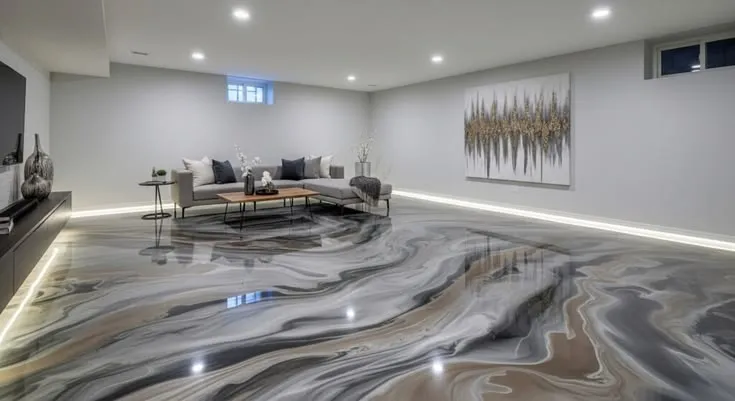
In many homes, attention naturally goes to lighting, furniture, and wall colors. Yet the floor can shape the atmosphere of a room just as strongly. Flowing pigments and reflective effects make metallic epoxy flooring an option for homeowners seeking a statement surface rather than a repeating tile pattern. That freedom demands careful decisions. Colors, room lighting, existing concrete, and everyday use should all guide a design before any resin is mixed.
Choose the Mood Before the Pigments
A metallic floor can look calm and stone-like or dramatic and abstract. Charcoal with silver accents may suit a minimalist interior, whereas warmer bronze shades can complement wood cabinets and soft lighting. The goal is to work with the room, not compete with every feature in it.
Collect a few examples that share a consistent mood instead of combining unrelated images. Ask the installer to explain which effects are reproducible and which depend on natural pigment movement. A sample cannot promise identical swirls across an entire floor.
Let the Light Influence the Design
Glossy surfaces reflect windows, ceiling lights, and objects in the room. That reflectivity may make a modern interior feel lively, although it can also create distracting glare in a home office or television area. Discuss lighting early.
Examine color samples at different times of day, ideally in the intended room. A gray that looks neutral under daylight can appear blue beneath certain bulbs. Furniture and curtains will change reflections once the room is occupied.
Match the Finish to Household Habits
A guest room and a busy kitchen place very different demands on a decorative surface. Pets, moving chairs, spills, and dropped objects should influence the chosen coating and any protective topcoat. Metallic patterns may hide certain marks while making other scratches noticeable under strong light.
When discussing residential epoxy flooring, ask about the entire system rather than just the decorative layer. Properly prepared concrete, compatible materials, appropriate traction, and clear maintenance instructions matter as much as pigment choice. A beautiful finish is useful only when it suits the room’s daily activities.
Keep the Project Brief Practical
Creative ideas become easier to execute when the homeowner and installer agree on constraints before work starts. Furniture removal, surface repairs, drying time, and safe access through the home should all form part of the plan. Budget for preparation.
A simple design checklist might include:
-
Main colors and acceptable pattern variation.
-
Room lighting and desired level of gloss.
-
Surface texture and slip-resistance needs.
-
Existing concrete defects and moisture concerns.
-
Curing instructions before furniture returns.
Documenting decisions improves expectations without demanding an exact pattern.
Give the Concrete a Proper Foundation
Metallic epoxy is not a shortcut around substrate problems. Old adhesives, grease, weak surface material, and unsuitable coatings may interfere with adhesion. Mechanical grinding creates an appropriate surface profile, and visible defects may need suitable repairs before the decorative system begins.
Moisture conditions also deserve attention. If a slab has recurring dampness or unexplained coating failure, the cause should be investigated. Ignoring underlying issues risks wasting materials and design work.
Understand the Installation Sequence
A metallic system generally involves surface preparation, compatible base layers, pigment application, and a protective finishing stage. Products have specific mixing instructions, recoat windows, and curing requirements, which can change with site conditions. The installer should explain these limits clearly.
The finish may look complete before it can tolerate furniture or normal foot traffic. Arrange another route through the home if necessary and keep pets away from the work area. Following the stated return-to-service schedule protects the new surface during its earliest stage.
Maintain the Design Without Overdoing It
Routine sweeping and compatible cleaning products help preserve the final appearance. Abrasive grit beneath furniture can scratch a glossy surface, so pads under frequently moved chairs are useful. Clean spills promptly instead of allowing residues to dry on the coating.
Avoid assuming that a seamless floor is indestructible. Heavy impacts, dragging appliances, and unsuitable chemicals can still cause damage. Ask the contractor how localized repairs are handled and keep the system’s care information for future reference.
Conclusion
An expressive metallic floor works best when creative choices are matched to realistic household needs. Planning the palette, testing light, preparing concrete, and respecting curing instructions can make the result more satisfying over time. Homeowners in Los Angeles and surrounding Southern California communities can review decorative and residential coating options through risecoatings.com before creating an interior feature that reflects both their style and the way they live.