
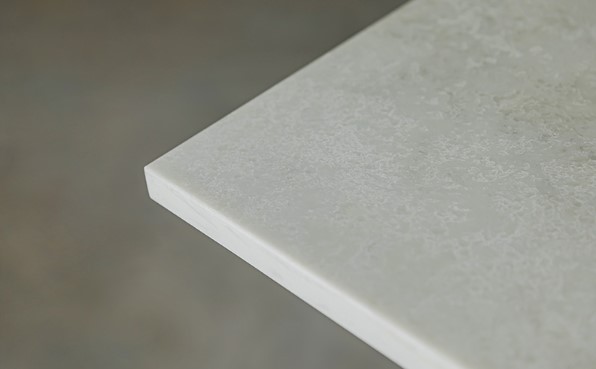
Quartz countertops are a popular option for dining rooms and kitchens due to their low maintenance requirements, long lifespan, and elegant appearance. However, when the conversation shifts to outdoor applications, many homeowners and designers are caught off guard by the limitations of quartz in open environments.
Here’s the unvarnished truth about whether quartz kitchen countertops belong outside, perfect for those considering bringing their interior design outside.
What Quartz Stone Is (And Isn’t)
Quartz stone, often used in quartz countertops, is an engineered material made by combining natural quartz crystals with resins, polymers, and pigments. This manufacturing process creates a dense, non-porous surface that’s resistant to staining, scratching, and microbial growth. It’s ideal for indoor kitchens where it’s protected from UV rays, temperature shifts, and moisture extremes.
However, this same composition is what makes quartz countertops vulnerable outdoors. The resin content is particularly sensitive to prolonged UV exposure. Over time, this can lead to discolouration, fading, and even yellowing, especially in lighter shades. Unlike natural stone, engineered quartz is not UV-stable unless specifically modified for external use.
Real Risks of Using Quartz Outdoors
While quartz stone is hardwearing, that toughness doesn’t automatically translate to outdoor durability. Direct sunlight is the primary issue. Even in partially shaded patios or covered balconies, ambient UV exposure accumulates and degrades the resin, which binds the quartz particles together. You might not notice a change in the first few months, but degradation can become obvious within a year—particularly in equatorial climates where UV levels are consistently high.
Additionally, temperature fluctuations can cause expansion and contraction in the material. Remember, outdoor surfaces endure heat from the sun during the day and cooling at night. These small but repeated shifts can lead to warping or even hairline cracks, especially along the edges and corners of a quartz countertop.
ALSO READ: Quartz vs. Sintered Stone: A Comparison for Your Kitchen
Water Exposure and Moisture Seepage
Another factor often overlooked is water. Though quartz countertops are marketed as water-resistant, that rating applies only to indoor conditions. Outdoors, especially during monsoon seasons, water can seep into joints, unfinished edges, and base attachments. If your quartz countertop isn’t sealed correctly or mounted on weatherproof furniture, moisture can compromise the structure or even cause mould growth underneath.
The resin binder is also not as chemically stable when exposed to both water and UV simultaneously. Rain followed by direct sun accelerates the breakdown of the material—something that would never occur under standard indoor use.
Are There Any Workarounds?
There are ways to use quartz stone outdoors, but with caveats. Some manufacturers offer UV-resistant quartz slabs, specially formulated for external applications. These products use enhanced resin blends and stabilisers, but they’re significantly more expensive and less widely available than standard indoor quartz.
If aesthetics are the primary driver and you want a quartz-style finish outside, consider porcelain or sintered stone alternatives. These are fully UV-stable, weatherproof, and visually similar to quartz. They also don’t degrade under heat or moisture and are increasingly used in high-end outdoor kitchens or garden dining areas.
Alternatively, if you’re set on quartz, opt for placing it in areas with full cover, such as sheltered patios or alfresco zones with UV-blocking roofing. Even then, be prepared for some degree of weathering.
Final Verdict: Keep It Inside
Quartz table tops work well indoors in climate-controlled environments. Their sleek design and resilience make them perfect for modern kitchen counters, island units, and dining tables. However, despite being marketed as durable, quartz is fundamentally not made for outdoor conditions unless specifically treated. Unless a specifically prepared product is sourced, the risks are greater than the benefits for anyone considering using quartz countertops outside.
Consult with a supplier who can provide quartz and weather-resistant alternatives that complement each other in style if you’re set on creating a seamless indoor-outdoor look. This approach is the best way to ensure consistency without compromising longevity.
Visit Stone Loft and let us help you find the perfect furnishings for your indoor and outdoor environments.