Maintaining a clean educational office environment is essential not only for appearance but for health and productivity as well. Schools, colleges, and educational facilities have high foot traffic, which increases the likelihood of dirt, bacteria, and viruses accumulating in shared spaces. From daily tasks to deep cleaning protocols, implementing effective cleaning practices can significantly enhance the environment for both staff and students. This guide provides comprehensive cleaning tips specifically designed for educational office environments.
Why Cleanliness Matters in Educational Offices
A clean educational office environment impacts more than just appearance. It plays a crucial role in:
- Reducing the Spread of Germs: Regular cleaning and disinfecting prevent bacteria, viruses, and allergens from spreading, which helps minimize illnesses.
- Improving Focus and Productivity: A clutter-free, well-organized space creates a positive work atmosphere that enhances productivity and focus.
- Promoting a Positive Image: Cleanliness reflects professionalism and dedication to maintaining a safe, welcoming environment for staff, students, and visitors.
To achieve and maintain a high level of cleanliness in an educational office, it’s essential to rely on professional cleaning services. Hiring office building cleaning services in Adelaide ensures that the job is handled with expertise, using quality cleaning products and methods suited to educational facilities.
Key Areas to Focus On in Educational Office Cleaning
Cleaning an educational office requires attention to detail across various spaces, each with unique cleaning needs.
1. Common Areas
Common areas such as lobbies, waiting rooms, and corridors are the first point of contact for visitors and staff. Regular cleaning ensures these areas remain presentable and sanitary.
- Vacuum and Mop Floors Daily: High-traffic areas collect dust and dirt quickly. Vacuuming and mopping daily prevents accumulation and helps avoid slipping hazards.
- Disinfect Touch Points: Light switches, doorknobs, handrails, and elevator buttons should be disinfected daily, as multiple people often touch them.
- Dust Furniture and Fixtures: Dusting chairs, tables, and decorative elements enhances the air quality and keeps the space visually appealing.
2. Workspaces and Desks
Workspaces need a clean environment for optimal productivity. Cluttered and dirty workstations can make employees feel unmotivated and distracted.
- Declutter Desks and Organize Supplies: Encourage employees to keep their desks free from unnecessary items to make regular cleaning easier.
- Wipe Down Surfaces: Daily wiping of desks and work surfaces with disinfectant helps keep germs at bay.
- Sanitize Electronic Devices: Computers, phones, keyboards, and mice should be disinfected regularly, as these items harbor germs that can easily spread.
3. Meeting Rooms
Multiple people often use meeting rooms, making them potential breeding grounds for germs and bacteria.
- Clean Table and Chair Surfaces: To maintain hygiene, all surfaces should be wiped down with disinfectant after each meeting.
- Vacuum and Remove Trash: Daily emptying trash keeps the room tidy and prevents odors.
- Sanitize Presentation Tools: Devices such as remote controls, whiteboard markers, and screens should be disinfected regularly.
4. Break Rooms and Kitchens
The kitchen and break rooms in educational office environments are high-use areas that require extra attention to prevent the spread of germs.
- Clean Counters and Surfaces: Wipe down all surfaces after use to prevent grime and bacteria buildup.
- Sanitize Appliances: Refrigerators, microwaves, and coffee makers need regular cleaning to avoid contamination.
- Empty Trash Daily: Regularly empty trash cans to prevent foul odors and maintain cleanliness.
5. Bathrooms
Bathrooms are among the most critical areas in terms of hygiene and cleanliness.
- Disinfect Toilets and Sinks: Daily disinfection is essential for controlling germs and maintaining hygiene.
- Stock Supplies: Ensure a constant supply of toilet paper, hand soap, and paper towels for employees and visitors.
- Wipe Down Mirrors and Fixtures: Keep mirrors clean and shiny, and wipe down sink fixtures to prevent water spots.
6. Reception and Entry Areas
Reception areas give visitors the first impression of cleanliness and professionalism.
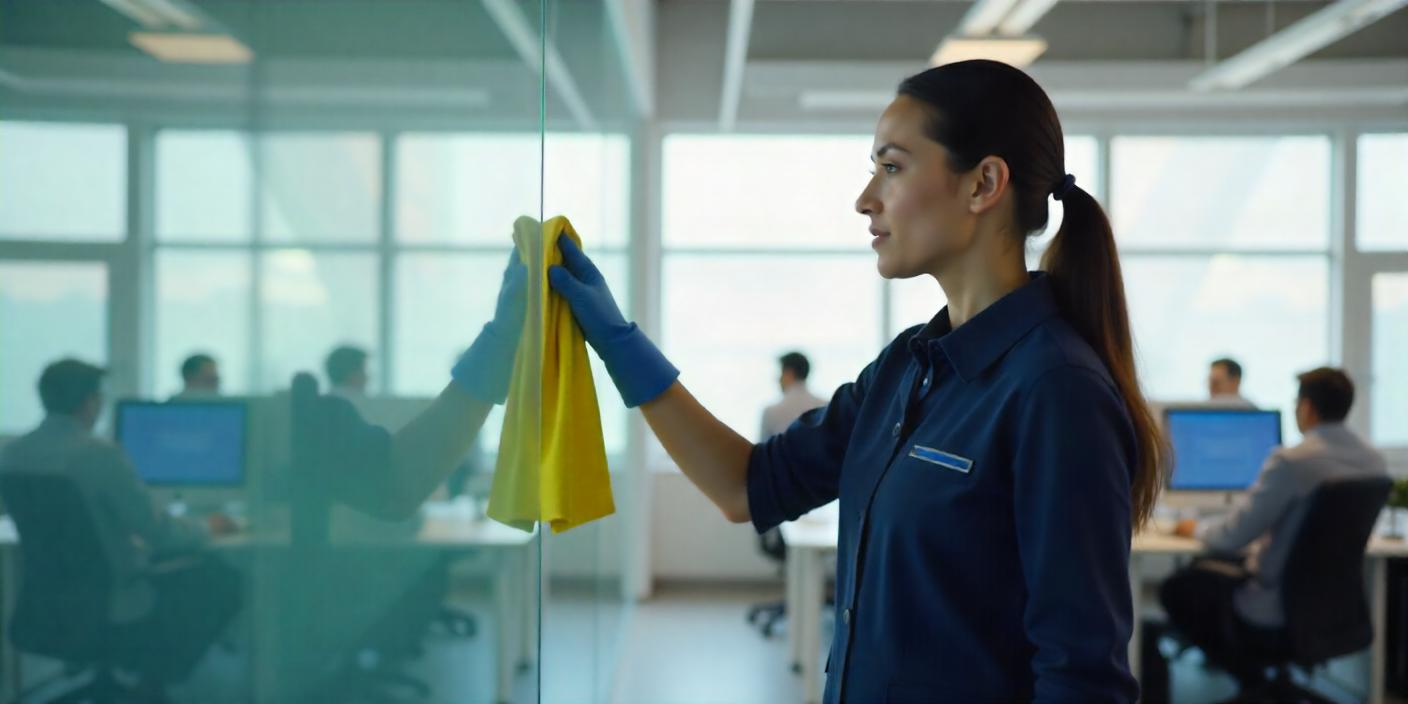
- Clean Glass Surfaces: To prevent fingerprints and smudges, windows and glass doors should be cleaned daily.
- Vacuum Carpets: Regular vacuuming is necessary to avoid dirt buildup if the entryway is carpeted.
- Sanitize Waiting Area Seats: Wipe down seats and tables in waiting areas to prevent germ transmission.
Daily, Weekly, and Monthly Cleaning Tasks
Having a structured cleaning schedule ensures consistency and thoroughness. Here’s a breakdown of tasks that should be performed daily, weekly, and monthly.
Daily Cleaning Tasks
Daily tasks focus on high-touch areas that require frequent cleaning to maintain a sanitary environment.
- Empty trash cans and replace liners
- Vacuum and mop floors in high-traffic areas
- Disinfect shared surfaces like doorknobs, light switches, and elevator buttons.
- Clean and restocked bathrooms
- Wipe down desks, counters, and tables.
Weekly Cleaning Tasks
Weekly tasks delve a little deeper, targeting areas that accumulate dirt and grime over a longer period.
- Deep clean all bathroom surfaces
- Vacuum carpets in low-traffic areas
- Wipe down interior and exterior windows.
- Disinfect shared office equipment like printers and copiers.
Monthly Cleaning Tasks
Monthly tasks include more intensive cleaning of hard-to-reach areas and heavy-duty equipment.
- Steam clean carpets and rugs
- Clean air vents and replace filters if necessary
- Polish furniture and wooden surfaces
- Wash walls and remove any scuff marks.
Using office cleaners in Adelaide with experience in educational settings ensures these tasks are completed to a high standard, creating a healthier, safer environment for everyone.
Importance of Eco-Friendly Cleaning Practices
In educational environments where students and staff spend significant time, eco-friendly cleaning products are especially beneficial. Harsh chemicals can irritate individuals with sensitivities or allergies, while sustainable products ensure a healthier space.
Benefits of Eco-Friendly Products
- Improved Indoor Air Quality: Non-toxic products reduce the number of airborne chemicals, contributing to better air quality.
- Safer for Staff and Students: Eco-friendly products reduce exposure to chemicals that can cause skin irritations, respiratory issues, or allergic reactions.
- Positive Environmental Impact: Using biodegradable, eco-friendly products minimizes environmental harm.
How to Implement Green Cleaning Practices
- Choose Green Certified Products: Look for products labeled as environmentally friendly or biodegradable.
- Use Microfiber Cloths: Microfiber cleaning cloths are more effective than traditional rags and reduce the need for harsh chemicals.
- Conserve Water: Limit water usage by using efficient cleaning methods, such as steam cleaning, where possible.
Seasonal Deep Cleaning and Maintenance
In addition to regular cleaning, seasonal deep cleaning is crucial to address areas that may need more attention.
End-of-Term Deep Cleaning
A deep clean at the end of each term allows for thoroughly cleaning the entire office environment, including hard-to-reach areas.
- Clean High Ceilings and Light Fixtures: Remove dust from ceiling fixtures, vents, and lighting.
- Wash and Sanitize All Surfaces: Desks, walls, and floors should be scrubbed and disinfected.
- Service HVAC Systems: Clean air ducts and replace filters to ensure optimal air quality.
Summer and Winter Maintenance
In educational offices, holiday periods are ideal for more intensive maintenance tasks.
- Polish and Refinish Floors: Hard floors can be stripped, polished, and sealed to maintain their condition.
- Repaint Walls: Fresh paint gives a clean and rejuvenated look, creating a welcoming environment.
- Inspect and Repair Fixtures: Check for any maintenance needs, such as leaky faucets or broken lights, and address these issues.
Benefits of Hiring Professional Cleaning Services
Professional cleaning services bring specialized knowledge, equipment, and methods tailored to educational office needs.
Consistency and Reliability
Professional cleaners follow a strict schedule, ensuring that all areas are regularly cleaned and maintained.
Expertise in Handling High-Traffic Environments
Educational offices with high foot traffic need more frequent and intensive cleaning. Professionals know which areas require extra attention to maintain a sanitary environment.
Access to Specialized Equipment and Products
Professional services have access to commercial-grade cleaning products and equipment, which deliver better results and help maintain a cleaner space.
By engaging office building cleaning services in Adelaide, educational institutions can ensure that their office environments meet high standards of cleanliness and hygiene, creating a healthier, more welcoming workspace for all.
Conclusion
Effective cleaning practices are essential for maintaining a healthy, productive educational office environment. Focusing on high-touch areas, creating a structured cleaning schedule, and embracing eco-friendly practices can make a significant difference. Partnering with office cleaners, Adelaide ensures the office space is consistently clean, organized, and ready for daily activities. By implementing these tips and best practices, educational offices can foster a welcoming and hygienic space that supports staff and student well-being.
